Guru Chandal Yoga: The Dramatic Name, Both Sides, and the Deciding Factors
The Jupiter-Rahu conjunction: a yoga that gives as much unusual thinking as unease; both sides, without fear.
Among the names of astrology, "Guru Chandal Yoga" is one of the most dramatic: on one side Guru, Jupiter, the great benefic of wisdom, dharma and propriety; on the other "Chandal", the word through which the tradition evokes Rahu's polluting, order-breaking influence. The name alone sounds like a curse sitting in the chart. The truth is different: the sources we studied present it as a conjunction that as often produces unusual, path-making thinking as inner unease. This article gives the full picture of that conjunction: formation, both sides, the factors that decide the outcome, a table of prominent houses, the cancellation conditions and the remedies, with every claim kept as a claim.
Dread in the name, a subject in practice
The tradition chose the word "Chandal" for Rahu because it holds that the shadow planet "pollutes" Jupiter's pure, sattvic intellect with material craving and a rule-breaking bent. The imagery was meant to alarm, and fear-selling uses it that way today. But note: both sources we studied say in their opening paragraphs that this is no curse but a yoga, a configuration capable of both kinds of outcomes. The dread in the name and the reality in practice are different things; in this article we read the practice, not the name. And remember that every "result" quoted here is a claim of the tradition or of modern writers, not a measured fact.
Formation: conjunction, the Ketu variant, and aspect
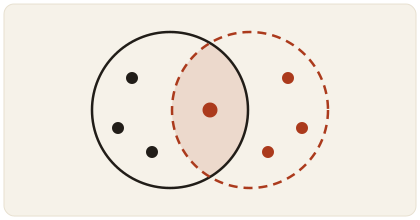
The core definition is simple: the yoga forms when Jupiter and Rahu sit in the same house, a conjunction. Jupiter signifies higher truth, ethics, faith and the guru principle; Rahu is the shadow planet of worldly desire, ambition and the unconventional. Sitting together, the planet of higher truth is coloured by material craving and boundary-breaking, and the tradition treats this friction as the heart of the yoga. Know two refinements. First, the Ketu variant: some traditions call a Jupiter-Ketu conjunction by the same name, but the colouring changes: Ketu's detachment, rather than Rahu's craving, colours Jupiter. Second, the aspect extension: one source places mutual aspect, Jupiter and Rahu viewing each other, in the same category as the conjunction. Both refinements are method-dependent: whether "the yoga is present" depends on which method you ask.
The friction: wisdom versus desire
The tradition reads the difficult side of this yoga on three fronts, and we repeat them as claims. First, the pull between principle and want: the person is said to feel knowledge and desire tugging at each other, with recurring dilemmas in ethical choices. Second, unconventional or heterodox belief: the conjunction is said to question orthodoxy, religion and received wisdom. Third, complicated relationships with teachers, gurus or morality, and sometimes with the father or mentors. Note that none of the three statements is bad in itself: questioning orthodoxy is the first condition of every reform. Trouble arises when questioning lacks discernment, and that is where the other side begins.
The other side: unconventional genius
Both studied sources emphasise the bright side of this yoga just as strongly, and that too is a claim. In their account, the same conjunction well placed gives three things: unconventional genius and original thinking, Jupiter's wisdom freed by Rahu from the captivity of convention; foreign success and breaking new ground, Rahu's domains amplified by Jupiter's expansion; and the courage to reform, challenging outdated, entrenched norms with knowledge. Modern sources add that this conjunction is frequently found in the charts of innovators, tech founders and thinkers who disrupt stagnant paradigms, especially when Jupiter is strong. We cannot verify these virtue lists, but one thing is certain: selling this yoga as only a "dosha" contradicts the sources' own balance.
The deciding factors
Both sources agree that the mere name of the conjunction says little; four things decide the outcome. First, Jupiter's dignity: a Jupiter exalted in Cancer or in its own Sagittarius or Pisces is said to carry Rahu's influence with grace, while a weak or debilitated Jupiter is said to scatter under the same influence. Second, the house involved: the house decides which area of life hosts the friction and the genius, as the next table shows. Third, benefic aspects: the aspect of a strong benefic such as Venus or Mercury is held to steady the conjunction. Fourth, the dasha: the tradition's rule is that the yoga is felt most during the periods and sub-periods of Jupiter or Rahu. So no conclusion follows from merely hearing "Guru Chandal is present"; these four questions come first.
Checking your own chart: three steps
Whether this configuration sits in your chart can be seen in three steps, without any specialist. Step one: cast a reliable chart from your birth date, time and place, and note the houses of Jupiter and Rahu; if both share one house, the conjunction is present. Step two: if the houses differ, check whether the two stand exactly seven houses apart, some methods count this mutual aspect in the same category; also check Ketu's house if your method counts the Ketu variant. Step three: if the conjunction is found, immediately run the four cancellation checks, Jupiter's sign, benefic aspects and the degree distance, because a single hit among them weakens the dosha reading. And one caution: if the birth time is uncertain, the house layout itself can change, so every diagnosis remains equally uncertain; Jupiter's and Rahu's signs move slowly, but houses depend on the birth time.
Expression in the prominent houses
The ishvaram.com source article gives a table of the conjunction's expression across prominent houses; we reproduce that table here, as its claims. These are house-wise indications, not predictions about any person's life:
| House | Domain | Expression per the source |
|---|---|---|
| 1st (Lagna) | Self and mind | Unconventional worldview, magnetic charisma, questioning of traditional dogma; strong rise in foreign institutions. |
| 2nd | Wealth and family | Sudden wealth fluctuations, unconventional speech; caution advised in financial agreements and family inheritances. |
| 4th | Mother and peace | Restless domestic life, frequent relocation; high success in modern architecture, foreign property and real estate. |
| 5th | Intellect and children | Profound out-of-the-box creativity, speculative brilliance, research aptitude; patience needed in academic certifications. |
| 7th | Marriage and business | Cross-cultural or unconventional marriage, sudden partnerships; ethical transparency demanded in contracts. |
| 9th | Dharma and father | Rejection of orthodox rituals in favour of deep esoteric or scientific truth; extensive international travel. |
| 10th | Career and status | Spectacular disruptive growth in media, politics, tech startups or modern research; challenges to established authority. |
Two things to remember while reading the table. First, it is a selection of "prominent houses", not the full twelve; the source article did not tabulate the rest. Second, every row has two parts: first the friction side, then the genius side. That structure is the essence of the whole yoga: one configuration, two directions, and the four factors above deciding the direction.
Cancellation: when the effect is held to weaken
Like every affliction concept in astrology, this yoga has its cancellation conditions, and the source article lists four. First, Jupiter is exalted in Cancer. Second, Jupiter is in Sagittarius or Pisces, its own signs. Third, the conjunction is aspected by benefic planets such as Venus or Mercury. Fourth, the degree distance between Jupiter and Rahu exceeds ten degrees: they share a house yet stand far apart. If any of these holds, the source calls the dosha's negative impact cancelled or substantially weakened. A practical rule follows: accepting the diagnosis the moment the conjunction is seen is a mistake; run the four cancellation checks first, and only then proceed.
The degree-distance condition deserves a closer look, because it is the least explained. A single sign spans thirty degrees, so two planets sharing one house can still stand up to twenty-nine degrees apart. The idea on the tradition's side is natural: a close conjunction, where the two hold nearly equal degrees, is treated as dense and effective, and the blending loosens as the distance grows. The source chose ten degrees as its practical boundary: beyond that, the conjunction remains one in name only. That boundary is not a rule but the source's method; another writer might say eight or twelve. The lesson is that "a conjunction is present" is a two-part statement, house conjunction and degree closeness, and the two are checked separately.
Remedies: simple, free, ethical
The tradition's remedies for this yoga are unusually gentle, and both sources agree on that. The list: respect for gurus, teachers and elders, since the yoga concerns the guru principle; Thursday observance and donation of yellow items or bananas on that day; japa of the Brihaspati beej mantra "Om Gram Greem Groum Sah Gurave Namah"; and worship of Shiva or Vishnu. One source says plainly to fit the remedy to your own Jupiter and Rahu and to skip the expensive fear-driven rituals. Notice that the whole list carries no cost, no risk and no dependence on any claim: practices of respect, study and remembrance are wholesome in themselves, yoga or no yoga. That is the test of this series: a remedy that is good even without the claim is the safe one.
The method's own limits
Honesty requires the method's limits to be stated as fully as its rules. First limit: the Nadi koota looks only at the birth star; the rest of both charts, Moon signs, lagnas, planetary positions, dashas, never enters this koota, so this koota can never be "the couple's complete match". Second limit: the cancellation rules vary by tradition; as seen above, some rules are near-universal in one tradition and rejected in another, so two scholars can reach opposite conclusions on the same couple, each correct within their own list. Third limit: ashtakoota is the prevalent method of North India; the South's ten-porutham method keeps different kootas, different weights and different rules, so the answer to "the match" can change when the regional method changes. Fourth limit, and the most important: no measured link is established between matching scores and marriage outcomes; the method is a traditional screening frame, not an outcome meter. A score read with these limits in view is useful context; a score read without them becomes a frightening number.
The balanced view
This article's position is plain. Selling Guru Chandal Yoga as a "curse" is wrong: the studied sources themselves call it a yoga, a two-sided configuration, and modern sources even treat it as a signature in the charts of innovators. At the same time, dismissing it entirely is unfair to the tradition: for people who use astrology as a life frame, this conjunction raises a genuine question of self-examination, "where is my balance between wisdom and desire?" That is the most useful reading: treat this yoga not as a matter of fear but of integration, grounding wisdom with discernment and turning Rahu's hunger toward ethical, original achievement. That advice stands true independently of the chart, and it is this article's real usefulness. There is also a wider pattern worth noticing across this series: the combinations sold with the most frightening names, Kaal Sarp, Pitra, Guru Chandal, turn out on inspection to be the ones whose own sources describe two-sided readings, cancellation conditions and gentle remedies. The name is marketing; the method is the substance. Whoever learns to ask for the method, formation, deciding factors, cancellations, before accepting the label, is already beyond the reach of fear-selling.
Common confusions
First confusion: the name contains "Chandal", so it is a curse. The name is the tradition's alarming imagery; the studied sources call it a two-sided yoga, not a curse. Second: the moment the conjunction is found, the result is fixed. Jupiter's dignity, the house, aspects, the dasha and the degree distance, all five together decide the outcome; the bare conjunction is inadequate information. Third: Jupiter-Rahu and Jupiter-Ketu are the same thing. Some traditions call both by one name, but the colouring is opposite: Rahu colours with craving, Ketu with detachment. Fourth: an expensive puja is necessary for the cure. The tradition's remedies are respect, Thursday observance, charity and japa, nearly free; pressure to spend is itself the warning sign.
Practical use
Use this article in three ways. First, as method literacy: knowing the definition, the Ketu variant and the cancellation conditions, you can test the structure of any "Guru Chandal" diagnosis yourself and ask the five deciding questions instead of being startled at the sight of the conjunction. Second, as decision safety: if someone sells you an expensive ritual in this yoga's name, remember that the sources' own remedies are free; adopt the second-opinion rule. Third, as self-examination: conjunction or not, the question "what is my balance between wisdom and desire?" is meaningful for every person; let this yoga be a reminder of that question, not of fear.
Sources and the honesty note
The formation, the Ketu variant, the two-sided reading, the deciding factors and the anti-fear remedy stance come from the Guru Chandal article at learn.acharyajyotish.com; that page associates itself with the classical tradition of Brihat Parashara Hora Shastra, but we have not examined that text ourselves. The prominent-house table, the four cancellation conditions (including the ten-degree distance) and the remedy details, including the beej mantra, come from the Guru Chandal article at ishvaram.com. Everything about effects is presented as the tradition's or the sources' claim; there is no established measured causal link between a chart configuration and a life outcome. This article is educational; it makes no claim about any person's chart or future.