Planetary Remedies: The Four Classical Kinds, the Layers of Their Sources, and the Right Ladder of Adoption
The map of the remedy system: four kinds, three literary layers, one separate system (Lal Kitab), and a ladder that starts free and ends expensive; the market runs it backwards.
Under the word "remedy" in jyotish, at least four different systems, three separate literary layers and one large marketplace operate at once. One person is suggested a gemstone, another a mantra, another a Saturday charity, and often all three arrive in the same list. This article is the map of the whole remedy system: which four classical remedy kinds every graha has, which one of them can backfire, which layers the remedy traditions come from, how the Parashari and Lal Kitab systems differ, and in what order the tradition says to adopt them. This is the base article of this cluster; each kind gets its own detailed article ahead.
The four classical kinds: gem, mantra, fast, charity
grahavaani's remedy index gives the whole frame in its first line: every graha has four classical remedies, a stone, a mantra, a weekday fast and a charity. Its next line matters as much: three of them can be started today, the fourth can make things worse, and most of the internet sells exactly that fourth one. The fourth is the gemstone. About the three "safe" kinds, two limits are fixed right here, because every kind-article ahead stands on them. First, fasting: a fast is a health matter; for people whose medicines, pregnancy, illness or eating-disorder history do not permit fasting, the fast-remedy is not for them, and prayer, charity or service never requires a fast. Second, the language of "effect": no consulted source anywhere carries measured physical evidence for any remedy's effect; whatever is said is the language of the tradition's belief and experience.
Kind one: mantra, the most direct layer
grahavaani calls the mantra the safest of the four: it can be started today, costs nothing, and cannot be worn against the chart the way a stone can. Its method points: the Sankhya, the prescribed repetition count, is completed over weeks, beginning with one mala of 108 a day and building up; and "sincerity matters more than arithmetic". For the beeja mantras and their counts it names chapter 87 of the Brihat Parashara Hora Shastra; that is its statement, we have not opened the chapter ourselves, so we record it under its name. From astrojanampatrika's Shani page, a concrete example: the Shani beeja mantra's count of 23,000 over a forty-day vow, or 108 daily on Saturdays; the simpler panchakshari "Om Sham Shanaishcharaya Namah" for a start. The full method of mantra japa, mala, direction, timing and count, is the subject of this cluster's mantra-japa-basics article.
Kind two: daan, charity aimed at a graha
Charity on the graha's own day, its items, to its people: that is the classical definition of daan, as grahavaani writes. One special role is recorded in its list: daan is the remedy given when a gemstone would be risky, because charity addresses a planet without amplifying it; that is why for Rahu and Saturn, where stones are withheld, daan is the main route. vidhata's Saturday list, audited in our Sade Sati remedies article, is an extension of this same kind: Saturn's items (sesame, mustard oil, iron, black cloth, old shoes), Saturn's people (the elderly, the poor, labourers), and the conduct rules: regularity over magnitude, anonymity over display. The per-graha charity lists will come in the daan-donation-by-planet article.
Kind three: vrat, the weekday fast
Every graha has its day, and the fast of that day is the oldest household layer of its worship. Two things always go with this kind. First, the health limit fixed above: a fast is never compulsory for anyone, and for those for whom fasting is a health risk, the alternative of this layer is always open: prayer, charity or service on the same day is complete worship without a fast. Second, the textual layer: in the weekday-fasting-guide article we will see that the fast stories come from the vrat-katha literature, not from transit arithmetic; this layer distinction will serve in every remedy kind.
Kind four: the gem, the only remedy that can backfire
The tradition's belief about gem remedies is this: a graha's gem strengthens that graha's activity. From this belief two conclusions follow. First, if the graha is a functional benefic for your lagna chart, the gem is held to help; if it stands in a maraka or malefic role, the same gem strengthens the very thing you were trying to fix. That is why grahavaani puts a twelve-lagna table on every gem page instead of a buy button, and withholds the gems of the two nodes, Rahu and Ketu, from most charts entirely. The second conclusion comes from ishvaram's examples: the tradition warns of sudden disruption from wearing blue sapphire untested, and for Mars in certain lagna placements red coral sits in the same risk category. Now our own boundary line, which applies across this whole cluster: this amplification theory is the astrological tradition's belief, not an established physical effect; the advice of a chart reading is not proof of a gem's safety or effectiveness, it is the tradition's own caution. And one market fact: among the four kinds the gem is the only expensive remedy; wherever a gem is being sold as the first remedy advice, remember grahavaani's ladder warning.
Auditing the layers: where remedies come from
The three-layer audit of our Sade Sati article applies to the whole remedy system. The first layer is Purana text: the Skanda Purana's Pippalada-boon verses and the Dasharatha reference, which we recorded through the indirect quotation of a StackExchange answer; we have not opened the primary text. The second layer is the jyotish works: grahavaani names Brihat Parashara chapter 87 for the beeja mantras and the Phaladeepika and Jataka Parijata for the nodes; these are its statements, not verified by us. The third layer is living practice and the market: the Saturday peepal-lamp tradition (astrojanampatrika calls it the most widely practised Shani remedy in India), the Hanuman-Shani narrative from the Ramayana tradition, and the modern lists. Record one textual discrepancy too: astrojanampatrika ties the Dasharatha-composed Shani Stotra to the Padma Purana's Uttarakhanda, while our earlier source tied the Dasharatha boon to the Skanda Purana; both transmission versions are on record, and we do not certify either.
In this same audit there is a fourth, separate system: the Lal Kitab. ishvaram makes it plain: published by Pandit Roop Chand Joshi between 1939 and 1952, this system is separate from Parashari remedies; its remedies are house-based and often unusual, burying copper coins, feeding specific items to birds, dropping things in flowing water, and they are tied to its concept of "Rin", karmic debt. One of ishvaram's lines matters: both systems are valid within their own frameworks, but do not mix them without expert guidance. We apply the same rule to the whole remedy system: a list that blends a Parashari mantra, a Lal-Kitab-style procedure and a gemstone sale in one breath is erasing the layer distinctions, and the layer distinction is the first verification of remedy reading.
The fast's household shape, and the silence method
grahavaani also writes the household form of the fast kind: on the graha's own day, usually one meal after sunset, without salt. And its explanation: it is as much a discipline as a ritual; the point is the weekly act of restraint, held long enough to mean something. Here one more method point deserves recording, perhaps this whole cluster's most valuable lesson: grahavaani writes that where the classical record is silent, which metal, which finger, how many carats, its pages stay silent too. The strength of most market lists runs exactly opposite: they fill precisely those empty spaces with the most confidence. This test can be applied to any remedy list: a list that deliberately does not say some things knows where the text ends; a list that says everything is partly guessing.
Dosha-based remedies: the third map
Parallel to per-graha remedies runs a second prevalent map, dosha-based: Manglik dosha, Kaal Sarp dosha, Sade Sati. grahavaani's dosha section lists exactly these three. Our earlier articles have audited the structure of all three, and one lesson found in the dosha articles is worth repeating here: a part of dosha-remedy lists is tied to the ritual centres where those rituals are sold; ishvaram's standard, that elaborate rituals are work for trained guidance while simple regular remedies are more valuable, should apply to those lists first. And one cross-connection: on the dosha side Sade Sati is not a dosha at all, it is a transit period; on the remedy side its lists sell beside the dosha lists. This slippage of naming itself shows the market's construction.
The order of adoption, and the limits
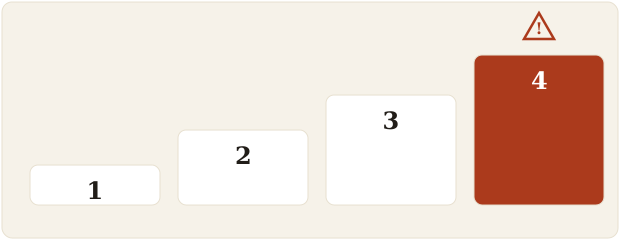
grahavaani's ladder: start from zero risk, conduct, recitation, small regular charity; only after sustained practice and a persisting difficulty come fast-vows, formal pujas, and finally gems. ishvaram adds the other end: elaborate rituals such as the Kaal Sarp puja, a Navagraha havan or Pitra Shraddh are work for a trained pandit's guidance; simple remedies done with understanding and regularity are held more valuable than elaborate rituals done without understanding. The limits are the same three that will run through the whole cluster: no consulted source carries a measured outcome claim for any remedy; remedies change neither the transit arithmetic nor the dasha; and the choice of remedy finally belongs to the person's own tradition, health and judgment.
Common confusions
First: remedy means gemstone. The gem is one of four, and last on the tradition's ladder; the first three cost nothing. Second: a gem "fixes" a planet. In the tradition's belief a gem adds strength, it does not change direction; the stone of a malefic-role planet strengthens the problem, and this whole theory is itself a belief, not a measured effect. Third: the costlier the ritual, the more effective. ishvaram says the opposite: a simple remedy done with understanding is more valuable. Fourth: Lal Kitab and Parashari remedies can be mixed. ishvaram plainly forbids it; the systems are separate. Fifth: a remedy requires fasting. No; fasting is a health-suitability matter, and prayer-charity-service is complete worship without a fast. Sixth: if a list says "classical", it is scripture-quoted. Our audit shows modern lists' scripture claims are often unverified; a source that does not show the primary text is making its own claim.
Practical use
First, before any remedy verify the question: whether the graha is actually in an effective position in the chart or not; grahavaani and ishvaram both name this as the first step, because a remedy without need is meaningless and in the gem's case risky. Second, climb the ladder from the bottom: conduct, charity, mantra; the gem last, and only after a reading by a qualified guide of your own tradition. Third, keep one system: Parashari or Lal Kitab, not a mixture. Fourth, trained guidance for elaborate rituals; home remedies simple and regular. Fifth, watch the cost signal: where the first advice is itself expensive, the ladder is running inverted; in grahavaani's language the classical order protects both the purse and the chart.
Three questions before reading any remedy list or advice: first, which kind of remedy is this; mantra, charity, fast or gem, and has the suggester named the kind. Second, which layer is its source; a scripture quotation, folk practice or a sales page, and if a scripture is claimed, was the primary text shown. Third, which rung of the ladder are you being asked to start from; if the first rung is expensive, that is the commercial order, not the traditional one.
Source note: this article rests on four primary sources. The four-kind frame, the gem ladder, the mantra method and the "where the classical record is silent, we stay silent" method: grahavaani (grahavaani.com/remedies and grahavaani.com/remedies/sade-sati). The Parashari-versus-Lal-Kitab distinction, the guidance advice for elaborate rituals and the warning against gemstone self-prescription: ishvaram (ishvaram.com/upay/). The ranked Shani remedy list, the peepal-lamp tradition, mantra counts and the Padma Purana reference: astrojanampatrika (astrojanampatrika.com/shani-remedies, 24 May 2026). The Purana-layer references and the charity conduct rules: the sources of our Sade Sati remedies article (a StackExchange answer, an indirect citation; vidhata). All scripture references (Brihat Parashara 87, Padma Purana, Skanda Purana and others) are recorded as the sources' own statements; we have not opened those primary texts ourselves. No measured outcome claim for any remedy was found in any consulted source; all effect statements, including gem amplification, are presented as the tradition's belief.