Rahu-Ketu Transit 2027: The Year with No Ingress, and the Full Chapter of the Capricorn-Cancer Axis
A Rahu-Ketu year in which nothing changes: one axis for all twelve months. A four-source date audit, the eclipse calendar, and the restraint that keeps an eighteen-month window as context, not prediction.
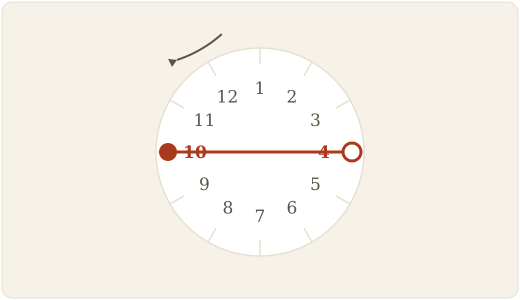
Most transit articles open with a date: on this day the planet enters that sign. For Rahu and Ketu, 2027 has no such date at all. drikpanchang's page for 2027 states plainly that Rahu will not transit during the year. The reason is simple: the nodes spend roughly eighteen months in a sign pair, and the current chapter runs from 5 December 2026 to 23 June 2028. So the whole of 2027, from 1 January to 31 December, sits inside one unbroken chapter: Rahu in Capricorn, Ketu in Cancer. This article audits that quiet year. First the orbital geometry that sets the nodes apart from every other graha, then a date audit across four sources, then how the Capricorn-Cancer axis is conventionally read, then the year's five eclipses, and finally the limits the sources themselves state.
What Rahu and Ketu are: not planets, two points
Rahu and Ketu are not bodies; they are two mathematical points in the sky. tempora opens its Rahu-Ketu transit note with exactly this: where the Moon's orbit crosses the Sun's path, the ecliptic, two intersection points form. The north one is Rahu, the south one is Ketu, and they always stand exactly opposite each other, six signs apart. That is why the tradition treats them as two ends of one axis: whatever sign Rahu occupies, Ketu automatically occupies the opposite one.
Their motion is reversed too. The Sun, Moon, Mars, Mercury, Jupiter and Saturn move forward through the zodiac order; the mean nodes creep backward, from Aries toward Pisces, from Pisces toward Aquarius. According to tempora this creep averages about three arcminutes a day, roughly a twentieth of a degree. At that pace, crossing one sign takes about five hundred and fifty days, close to eighteen months, and a full circuit of the twelve signs about 18.6 years. Those two numbers, eighteen months per pair and the 18.6-year circuit, set the entire rhythm of nodal transit.
One special point: the mean nodes are never retrograde or direct, because their motion is always backward to begin with. The retrograde-station complexity of the Saturn article does not exist on the nodes' average path. There is a finer computation called the "true node" that tracks the wobble of the lunar orbit, in which the point occasionally jiggles forward; mykundliai notes that true-node dates can differ by one to two days. As the audit below shows, the real disagreement is larger than that.
The date audit: four tables, one conclusion
First the dates on which sources agree. vedara's table, computed on the Lahiri ayanamsa and the mean node in UTC, gives: Rahu from Aquarius into Capricorn and Ketu from Leo into Cancer on 5 December 2026 at 17:03 UTC, and the next ingress on 23 June 2028 at 20:00 UTC, when Rahu moves from Capricorn into Sagittarius and Ketu from Cancer into Gemini. Our IST conversion: 5 December 2026 at 10:33 pm IST, and 24 June 2028 at 1:30 am IST (this conversion is our own computation). astroayana and mykundliai, both Lahiri-based, give the same span: 5 December 2026 to 23 June 2028. Three independent Lahiri sources land on the same day.
The fourth source keeps different time. tempora, which computes on its "True Pushya Paksha" ayanamsa with the mean node, dates the same chapter 27 December 2026 to 15 July 2028: twenty-two days later than the Lahiri sources. tempora itself explains disagreements of this kind: the ayanamsa choice and the mean-versus-true node handling both shift dates. One open tangle must be recorded here: tempora's own note says a 0.1-degree difference amounts to about a two-day difference; on that scale a twenty-two-day gap would need about 1.1 degrees of difference, which the ayanamsa difference alone does not fully account for. The node model or the true node's wobble near the boundary crossing may also be folded in; the source does not spell it out, and we leave it unresolved.
The practical conclusion stands above these disagreements: the twenty-two-day gap sits at the edges, in December 2026 and June-July 2028, and the whole of 2027 lies inside both windows. Whether you take the Lahiri table or the Pushya Paksha one, from 1 January to 31 December 2027 Rahu is in Capricorn and Ketu in Cancer; all four sources agree on this. drikpanchang's line, that Rahu has no transit in 2027, is the simplest form of that unity.
The Capricorn-Cancer axis: how sources read it
One prevalent reading method, as tempora records it: the two ends of the axis do opposite work. The Rahu end amplifies: appetite, ambition, grasping, the urge to do too much. The Ketu end releases: indifference, restraint, the pull to loosen from the roots. Note the status of this frame: it is a reading convention, not a measured law; tempora calls it structural context, not scored prediction.
On that convention, the 2027 chapter reads: Rahu in Capricorn, the sign of institutions, hierarchy, administration, systems and long-term structures, carries the amplification wave; Ketu in Cancer, the sign of home, roots, the sense of safety and care, carries the loosening or re-evaluation wave. tempora frames this as a tension between institutional structure and domestic roots. In the language of the natural chart this is the tenth-fourth house axis: the public field of work on one end, home and the private base on the other. The chapter's most direct symbolic reading is that the pull toward systems and the detachment from home run together. The same caution applies: this is a symbol reading, not an event timetable.
In your chart: ascendant first, then the Moon
Two conventions for bringing a transit down to a personal chart appear in the sources. tempora writes that counting should be done from the ascendant first and from the Moon second. Many practical sources such as mykundliai count houses from the Moon sign. The existence of both conventions matters, because the same axis yields different house numbers from each. The heaviest placement belongs to natives with Capricorn or Cancer ascendant: for them the whole of 2027 holds the axis on the first-seventh houses, the line of self and partnership; tempora names these two ascendants as the chapter's direct carriers.
Below is the house table counted from the Moon sign. This is entirely our own mechanical computation: the distance from Capricorn to the Moon sign gives Rahu's house, the distance from Cancer gives Ketu's. No source supplied it; we built it from plain sign-order counting.
| Moon sign | Rahu (Capricorn) house | Ketu (Cancer) house |
|---|---|---|
| Aries | 10 | 4 |
| Taurus | 9 | 3 |
| Gemini | 8 | 2 |
| Cancer | 7 | 1 |
| Leo | 6 | 12 |
| Virgo | 5 | 11 |
| Libra | 4 | 10 |
| Scorpio | 3 | 9 |
| Sagittarius | 2 | 8 |
| Capricorn | 1 | 7 |
| Aquarius | 12 | 6 |
| Pisces | 11 | 5 |
The limit on reading the table is the one running through this article: a house number describes structure, not outcomes. The house's meaning also depends on the source convention, and above any sign-level note sit the chart's own layers, the dasha above all.
The five eclipses of 2027: when the axis shows in the sky
The firmest proof of the nodes' orbital geometry is eclipses. An eclipse happens only when the Sun or Moon stands near these very node points; that is why tempora calls Rahu-Ketu the eclipse axis. According to timeanddate's list, 2027 holds five eclipses: an annular solar eclipse on 6 February (visible across much of Africa and South America), a penumbral lunar eclipse on 20-21 February, an almost-total lunar eclipse on 18-19 July, a total solar eclipse on 2 August (Europe, South and West Asia, Africa), and a penumbral lunar eclipse on 16-17 August.
Of these, the total solar eclipse of 2 August is the one tempora specifically records: it falls on this very Capricorn-Cancer axis. Sidereally this is natural; in early August the Sun is in Cancer, where Ketu has been sitting all along. At the February eclipses the Sun stands near the Capricorn-Aquarius boundary, in Rahu's neighbourhood. The practical value of eclipse dates for the reader is this: whatever traditional notes circulate about the axis being "activated", their astronomical root is here, the direct alignment of Sun and Moon near the axis. We do not expand on the eclipses' astrological outcomes; the consulted sources offered no scored assessment for 2027.
Limits, in the sources' own words
The restraint tempora practices through its note is this article's most valuable material. Three lines, faithfully paraphrased: first, structural windows are context, not scored prediction. Second, an eighteen-month sign-level window is the coarsest nodal instrument there is; conclusions about months or weeks do not come out of it. Third, in personal timing the dasha layer sits on top; transit is background, not the clock. Without this restraint, extracting "next week this will happen" from an eighteen-month chapter belongs to the same mechanical reading that paramarsh criticized in the dasha articles.
The second limit belongs to the dates, from the audit above: two ayanamsa methods place the chapter's edges twenty-two days apart. If your work concerns the edges, December 2026 or June 2028, that difference matters and you must fix your method. For the middle of 2027 the difference is irrelevant. The third limit is the true node's: per mykundliai, true-node dates can shift by one to two days, and per tempora disagreements can run from days to weeks. None of this touches a sign-level conclusion; for anyone interrogating the boundary-crossing days it is a real uncertainty.
Common confusions
First confusion: Rahu will change signs in 2027. No; all four sources, drikpanchang included, list no ingress within 2027. Second: Rahu and Ketu are planets that transit. They are orbital points; tempora's geometry explanation is above. Third: Rahu in Capricorn means a bad time for Capricorn people. The amplify-release convention is not a merit table; tempora calls it context, and the house table is our own mechanical computation. Fourth: a year of five eclipses is unusually dangerous. In timeanddate's list, five-eclipse years sit within the normal range, and we found no scored assessment of their outcomes in the sources. Fifth: all panchangs will give one date. The audit above shows a twenty-two-day difference exists, and it is a difference of method, not of error. Sixth: the nodes too go retrograde and direct. The mean node always moves backward; the language of retrograde and direct does not apply here.
Practical use
First, note your own placement: your row pair from the Moon-sign table above, and your ascendant if you know it; Capricorn and Cancer ascendants carry the first-seventh axis all year. Second, care at the edges: the announced dates of December 2026 and June 2028 differ by twenty-two days between the two methods; note which method you use. Third, record the eclipse dates separately: 6 February, 20-21 February, 18-19 July, 2 August, 16-17 August; traditions that keep eclipse-period rules apply them on these dates. Fourth, keep the chapter reading as context: the institution-versus-home tension is a background thread, not a programme. Fifth, for timing decisions keep the dasha on top: tempora and the dasha tradition agree that a transit without the dasha is not a clock.
Three questions before reading any Rahu-Ketu transit: first, which ayanamsa and which node model do the dates belong to; a twenty-two-day difference between Lahiri-mean and Pushya-Paksha-mean is on record. Second, is the reading counted from the ascendant or from the Moon; both conventions are prevalent and change the house numbers. Third, is the reading using an eighteen-month window as context or as a week-level prediction; tempora places the second beyond this instrument's limit.
Source note: this article rests on five primary sources. Confirmation of no ingress in 2027: drikpanchang (drikpanchang.com/planet/transit/rahu-transit-date-time.html?year=2027). Lahiri mean-node dates, 5 December 2026 to 23 June 2028: vedara (vedara.me/data/rahu-ketu-sidereal-ingresses, in UTC), astroayana (astroayana.com/transits/rahu-ketu) and mykundliai (mykundliai.com/transits/rahu-ketu/2026; true node may differ by one to two days). Pushya-Paksha-based dates, 27 December 2026 to 15 July 2028, the orbital geometry, the amplify-release convention, the ascendant-first convention, the 18.6-year circuit, the limits of the eighteen-month window, and the primacy of the dasha layer: tempora (tempora.ltd/findings/rahu-ketu-transit, 10 July 2026). Eclipse dates and types: timeanddate (timeanddate.com/eclipse/list.html?year=2027). The IST conversions and the Moon-sign house table are our own computation. The twenty-two-day difference between the two ayanamsa methods is not fully explained in the sources we consulted; it is recorded as unresolved.