Rudraksha: The Object Examined, the Tradition of the Faces, the Planet-Mapping Dispute, and How to Read the Market
One object, two sources, one collision: the mukhi-to-planet table one page calls tradition, the other calls a recent sales taxonomy; and both agree on one thing: the real risk is not in the bead but in the claims attached to it.
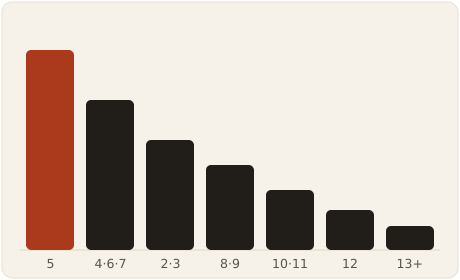
Rudraksha is the one object in the remedy system about which both our principal sources reach the same conclusion: the real risk is not in the bead but in the claims attached to it. One source's audit concludes that the most substantial harm it could document was financial; that conclusion states the scope of its own review, and it does not rule out harms the consulted sources did not examine, from swallowing or skin irritation to the cost of delayed medical care. The second source presents a complete table mapping mukhi counts to planets, while the first calls that same mapping "a recent sales taxonomy," not scripture. This article is the complete audit of the rudraksha: what the object is, where the mukhi tradition comes from, what the wearing rules really are, which authenticity tests work and which do not, and how the market's fear-selling structure is recognised.
The object: a seed, not a gem
A rudraksha is not a gemstone or a stone; it is the hard seed of a fruit: the stony stone of a blue fruit borne by an evergreen tree botanists call Elaeocarpus ganitrus, grown mainly in Nepal, Indonesia and parts of India. The name means "Rudra's eye"; tradition says Shiva's tears became the trees. The mukhi, the "faces," are the natural clefts running from the hole at one end of the seed to the hole at the other, dividing the surface into segments; these clefts correspond to internal compartments, and that fact later becomes the basis of the laboratory test. Both sources report the same structural fact: the distribution is heavily lopsided. Five-mukhi beads make up the bulk of any harvest; that is why ordinary malas are five-mukhi, why they are cheap, and why the tradition treats the five-mukhi as the general-purpose bead rather than an inferior one. Four, six and seven are reasonably common; one, two and three are uncommon; counts above eleven become scarce quickly; and naturally fused beads, two joined as a Gauri Shankar or three as a trijuti, are rarities of the same order. epandit adds a market fact about the one-mukhi: a round one-mukhi is extremely rare and fakes are common; in this price range you will usually find the half-moon (kaju) shape, so do not buy without checking.
The mukhi associations: a list of deities, and lists that disagree
The traditional associations attached to each mukhi count come from devotional literature. tantravidya's table, with its recorded disagreements: one, Shiva himself, the undivided absolute; two, Shiva and Shakti in the Ardhanarishvara form; three, Agni and the three sacred fires; four, Brahma and the four Vedas; five, Kalagni Rudra and the five faces of Sadashiva; six, Kartikeya in most lists, Ganesha in some; seven, the seven sages or the Mother goddesses, Lakshmi in later lists; eight, Ganesha, the eight Bhairavas in some sources; nine, Durga and the goddess's nine forms, Bhairava in some lists; ten, Vishnu and the ten directions; eleven, the eleven Rudras, Hanuman in later devotional lists; twelve, Surya and the twelve Adityas; at thirteen and above the lists thin out and diverge sharply, Indra or Kamadeva at thirteen, Shiva's third eye at fourteen. The source's own note matters: these are associations, not demonstrated effects, and the lists disagree with one another.
The centre of the audit: where the planet mapping came from
Here sits this article's biggest finding, and it is a direct inter-source collision. epandit gives a full mukhi-to-planet table: one-mukhi Sun, two Moon, three Mars, four Mercury, five Jupiter, six Venus, seven Saturn, eight Rahu, nine Ketu, and writes that tradition links them. tantravidya stops after its own table and writes: notice what is missing, planets; mapping mukhi counts onto the nine planets, and from there onto remedies for horoscopic problems, is prominent in modern retail and far less evident in the older devotional sources, which speak of deities and merit rather than of defects to be corrected by purchase; "this mukhi for your Saturn" is a recent sales taxonomy, not scripture. We opened both sources; the collision is on record, and we do not certify either. But one structural fact is worth recording: epandit's table walks the planets in exact weekday order, Sun to Saturn, and slots Rahu and Ketu into positions eight and nine; that arrangement has the look of a tidy modern system, which lends weight to tantravidya's verdict. And one scoped limit: we ourselves opened the BPHS remedy chapter for the daan article; rudraksha does not appear in that chapter, a remark strictly limited to that one consulted chapter.
How the tradition uses it: counting, identification, worship
The oldest and least contested use is counting: a rudraksha mala of 108 beads plus a sumeru marker is the standard counting string of Shaiva practice, whose full mechanics our japa article has already opened. Beyond counting, rudraksha is worn: ascetics, temple priests and Shaiva householders wear single beads, short strings at the throat or long strings over the shoulder; in the Nath Sampradaya it works as a visible sign of allegiance to Shiva, worn as identification and reminder, not as an amulet bought for an outcome. tantravidya is equally plain about the textual basis: the most-cited sources are Puranic, a well-known treatment in the Shiva Purana, one short text among the minor Shaiva Upanishads, and the medieval digests; and it deliberately gives no verse numbers, because rudraksha pages across the internet cite chapter and verse with a confidence the manuscript situation does not support, and a wrong citation is worse than none. That citation ethic is a lesson this whole program shares. And its gap note: those sources praise the bead, describe the merit of wearing it, associate faces with deities; they do not grade beads for resale, quote prices, guarantee cures or promise promotions. The gap between devotional praise and worldly guarantees is where the modern rudraksha business lives.
The wearing rules: customs, not commands
tantravidya's rules table records an agreement level for each custom, and its headline is the essence: these are customs that vary by lineage, region and teacher, the sources disagree, and no harm is documented from breaking any of them; they are conventions of respect, like removing shoes at a shrine. The substance: cleaning, rinse in clean water and dry properly, occasionally a little oil so the bead does not dry out and crack; broad agreement on the practical part, the milk or abhisheka water a local custom. Thread, red, black or undyed silk or cotton, silver or gold capping for jewellery; entirely conventional, no source treats thread colour as essential. Putting on, often on a Monday or a Shiva festival, after bathing, sometimes with a mala of Om Namah Shivaya; common practice, not a textual requirement. Removing, for soapy bathing, sleeping, the toilet, cremation attendance; widely taught and widely ignored, and the ascetics who never remove theirs are equally traditional. Diet, some teachers ask for avoiding meat and alcohol; that reflects the vows of Shaiva devotion generally, not a property of the bead. A cracked bead is retired and the mala restrung; a practical matter, not an omen, whatever the person selling the replacement says. On the women's question its answer is clear: yes; the mainstream sources carry no prohibition; the menstruation restrictions that circulate are regional and family customs, and if a seller invokes one at the point of sale, notice that the claim arrived attached to a transaction.
Real versus fake: which checks work
Both sources teach the same basic separation: keep two questions apart. First, is this a natural rudraksha seed at all, or a manufactured object; second, does it have the number of faces it is sold as having. Most beads pass the first test; a significant share fail the second, because the profitable fraud is not making a bead from scratch but turning a common bead into a rare one: carving a sixth cleft into a five-mukhi bead is the commonest fraud there is. The checks that work: examine the clefts under magnification, a natural groove is irregular, wanders slightly and runs hole to hole, while a cut groove has even depth and tool marks; look for a join, two half-beads glued leave a seam or colour mismatch near the hole; watch for moulding, beads pressed from seed paste or resin feel uniform and light; apply price sanity, a round one-mukhi or a fourteen-mukhi at a price no genuinely scarce object could support is itself the information; and for anything expensive, X-ray or CT imaging, which shows the internal compartments that should match the external faces, the only widely available objective check. epandit adds: the certificate should carry a number and a photo of the bead, verifiable with the lab; and both Nepal (larger) and Indonesian (smaller) beads are genuine rudraksha, just have the origin written on the bill, because prices differ a lot.
And the tests that do not work, because the market runs on exactly those. The water test: "a real rudraksha sinks," it does not reliably do that; floating depends on density, which varies with species, size, dryness, soaking time and oiling; genuine beads float, fakes sink. The copper-coin rotation test is equally useless: the seed is plant matter, not magnetic, unaffected by copper; the movement comes from the tremor of the hands and the torsion of the thread, which is why the demonstration works just as well with a fake, and why it is a staple of sales floors rather than laboratories. Boiling and colour-bleed fare little better: bleeding tells you a bead was dyed, which is common and not the same as fake, and boiling damages a genuine seed.
Price, rarity, and the selling of fear
Rudraksha pricing follows rarity, and rarity claims are unverifiable at the point of sale; no better combination exists for a seller. On top sits a structure tantravidya names: a spiritual problem diagnosed by the person who sells the remedy; a customer worried about a court case or a run of bad luck is told a particular planet is afflicted and is offered a specific bead at a specific price as the fix. Its balancing line is this category's central finding: none of this makes rudraksha suspect; a five-mukhi mala from an ordinary shop at an ordinary price is exactly the object the tradition has used for centuries, and it counts a mantra as well as any bead ever has; suspicion is owed to the claims attached to beads, not to the beads.
Limits
This article's limits are explicit. Health: rudraksha is not a medical treatment; claims that wearing one lowers blood pressure, eases anxiety, improves fertility or treats thyroid are not supported by reliable evidence, tantravidya's statement which we adopt; a health problem goes to a qualified doctor, not a bead, and delaying or replacing treatment on the strength of a bead is this category's worst use. Physical safety sits outside both sources' scope: neither examined ingestion (a bead is not a thing to eat), the choking hazard of small beads around children, or skin reactions to metals and polishes, so this article does not claim that wearing is risk-free. Effect language: the mukhi associations are devotional literature's associations, not demonstrated effects; no consulted source offered a measured outcome. Remedy status: no "amplification" doctrine like the gems' appears in our sources for rudraksha, and in the consulted sources no harm from the wrong mukhi or wrong wearing is documented; but unlike mantra and daan it is a purchased object, so the market tests apply in full: an unverifiable rarity claim, a diagnosis and cure from the same shop, or a certificate that refuses verification are all warning signs.
Three questions for any rudraksha list or shop
First, which layer is the mukhi-planet mapping from: devotional literature's deity associations, or modern retail's planet table? Our two sources collide directly on this, and the weekday-order tidiness of the table points to a modern arrangement. Second, can the rarity claim be checked: for round one-mukhis and high mukhis, a seller who refuses X-ray verification or a certificate check has already answered; a five-mukhi should carry a modest price, because it is the bulk of the harvest. Third, are diagnosis and cure coming from the same shop: recognise the "your planet is afflicted, take this bead" structure; and remember, suspicion is owed to the claims, not to the bead.
Source note: this article has two principal sources, both opened in full. tantravidya (tantravidya.in/rudraksha, 24 September 2026): the botany, the cleft-compartment correspondence, the abundance distribution, the mukhi-association table with its disagreement notes, the "recent sales taxonomy" verdict on the planet mapping, the usage layers (counting, identification, worship), the textual layer with its citation-ethics note, the rules table with agreement levels, the women's question, the harm audit, the working checks and the failed tests, the fear-selling structure, and the health boundary. epandit (epandit.in/en/upay/rudraksha): the complete mukhi-to-planet table (one-Sun through nine-Ketu, in weekday order), the wearing days and mala method, the half-moon one-mukhi warning, the X-ray certificate verification checklist, and the Nepal-Indonesia origin advice. The two sources' collision on the planet mapping is recorded as it stands. In none of the sources did we find measured physical evidence for any fruit of wearing rudraksha; all effect language is presented as the devotional tradition's belief.


