Tara bala and the navtara chakra: the full arithmetic of the nine taras
How a tara is counted, what the three-rounds rule is, and how to work out the tara of any moment yourself.
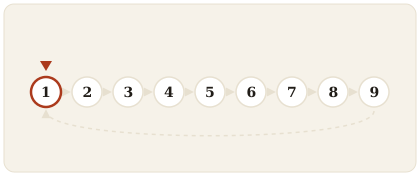
Tara bala, the navtara chakra, is panchang astrology's personal daily gauge: it measures the distance between your birth nakshatra and the nakshatra the Moon occupies today. The method is one line: count from your birth nakshatra to today's nakshatra, inclusive, and read that count in a cycle of nine. There are nine taras: Janma, Sampat, Vipat, Kshema, Pratyari, Sadhaka, Vadha, Mitra and Ati-Mitra; across the 27 nakshatras the cycle turns exactly three times. This article opens out the full arithmetic of the method: the counting rule, the three-rounds rule, the naming variants across editions, the disagreements between sources over the auspicious classification, and one important limit of the sunrise convention. As is this series' custom: the mathematics is neutral, and the predictive words are labels, not prophecies.
What tara bala is: a personal day gauge
Panchang gauges like Rahu Kaal or the choghadiya are the same for everyone; tara bala is different, because it is tied to your birth nakshatra. The question it asks: the nakshatra the Moon sits in today is how many nakshatras away from the one the Moon sat in at your birth? That distance, read in a cycle of nine, names the day's "tara" for you. So a single day gives 27 different readings for people of the 27 different birth nakshatras. Its traditional use was in muhurta: checking one's tara while electing a day for a specific undertaking. It is the nakshatra counterpart of chandra bala, which asks the same question by sign. The comparison clarifies the method: chandra bala asks which house today's Moon occupies from your birth sign; tara bala asks how many nakshatras today's Moon nakshatra lies from your birth nakshatra. The sign gauge has 12 slots, the nakshatra gauge 27, and the tara cycle selects 9 of them; tara bala is therefore the finer and faster-moving of the two.
The counting rule: count both ends
The rule of computation: start counting at your birth nakshatra, counting it as 1, and continue to today's Moon nakshatra. Then read that count modulo 9; remainders 1 to 8 name their tara, and remainder 0 names the ninth tara. Example: birth nakshatra Rohini, the 4th nakshatra, and today the Moon is in Hasta, the 13th. The count: 13 minus 4 plus 1, that is 10. Ten divided by 9 leaves remainder 1, the first tara, Janma. A second example: birth nakshatra Ashwini and today's Moon in Ashlesha, the 9th nakshatra: count 9, remainder 0, the ninth tara, Ati-Mitra. The same computation repeats for every day and every birth nakshatra; there is no hidden knowledge in it, only counting.
The nine taras: names and traditional characters
The nine taras and the senses of their names: Janma, of birth; Sampat, prosperity; Vipat, calamity; Kshema, well-being; Pratyari, obstruction; Sadhaka, accomplishment; Vadha, harm; Mitra, friendship; Ati-Mitra, the greatest friendship. The tradition sorts them into three classes: Sampat, Kshema, Sadhaka, Mitra and Ati-Mitra as favourable; Vipat, Pratyari and Vadha as adverse; and Janma standing apart, counted neither clearly favourable nor adverse but sensitive. The names alone reveal a structure: from Sampat to Mitra the favourable and adverse taras alternate - second favourable, third adverse, fourth favourable, fifth adverse - and at the end Ati-Mitra doubles the favourable. That alternation is the design of the scheme, not a coincidence of naming; and it explains why your tara's verdict flips almost daily as the Moon moves on.
Three rounds: 27 nakshatras, nine taras, three cycles
Across 27 nakshatras the nine taras occur exactly three times: the first round covers counts 1 to 9, the second 10 to 18, the third 19 to 27. Here the tradition holds a subtle rule that is little known. According to a secondary source, verses 4.11 to 4.13 of the fourth chapter of Muhurta Chintamani give the tara count and the rounds rule: in the first round all three of Vipat, Pratyari and Vadha count as unfavourable; in the second round only certain padas of them - the first pada of Vipat, the fourth of Pratyari and the third of Vadha; and in the third round, none. In other words, the tradition itself diminishes the effect with distance: the further the round, the lighter the reading. A tara list read without this rule is incomplete; most online tables today do not show the round distinction. One source phrases the same sense more simply: the first round is of full intensity, the second somewhat reduced, the third further still; simpler than Muhurta Chintamani's fine pada rule, but the direction is the same. The Narada quotation, which calls the first, third, fifth and seventh taras unfavourable, is another expression of the same habit: restraint on the odd taras. Placed together, the two views show the scheme's inner consistency: the alternation of favourable and adverse is the very rhythm of this wheel.
Naming variants: one tara, several names
Reading tara lists, you meet differences in naming, and they create confusion. The seventh tara is called "Vadha" by some sources, "Naidhana" by others; the ninth is "Ati-Mitra", "Parama Mitra" or "Adhi-Mitra"; the fifth "Pratyari" or "Pratyak"; the sixth "Sadhaka" or "Sadhana". Citing the 1928 edition of Muhurta Chintamani, a source gives these names: Janma, Sampad, Vipad, Kshema, Pratyari, Sadhaka, Vadha, Maitra and Atimaitra. The variance is only in words; the computation is one and the same: the count and the cycle of nine. Still, a reader needs to know that "Sadhana" and "Sadhaka" on different panchangs or websites are one tara, not two different ones.
Disagreement over the auspicious classification
Sources are not unanimous even on which taras are favourable, and the disagreement deserves recording. Janma tara is called "neutral but sensitive" by one source, "inauspicious, a mark of vulnerability" by a second, and "mixed, to be treated with respect rather than fear" by a third. The count of favourable taras also shifts: five in one place, six in another when Janma in its second and third rounds is counted favourable. The Muhurta Chintamani commentary quotes Narada placing the first, third, fifth and seventh taras in the adverse line, which means an opinion exists that classes even Janma as adverse. One source, in its own scoring, gives Vadha double the weight of the other adverse taras. The conclusion from all this is the one this series keeps reaching: the classification is a decision of the tradition, not an astronomical necessity; what is stable across every source is the substance of the method, and that is the counting structure.
The full method for any moment
Working out the tara for any moment takes five steps. Step one: know your birth nakshatra; this is the Moon nakshatra of your birth chart, from any reliable chart software or birth record. Step two: know the Moon nakshatra of the moment in question; a daily panchang or panchang service gives it, with the caution that an ayanamsa difference can shift borderline positions by one nakshatra. Step three: write down both serial numbers, Ashwini 1 to Revati 27. Step four: compute the count: subtract the birth number from today's number and add 1; if the subtraction is negative, add 27, because the wheel is round. Step five: read that count modulo 9; a remainder of 0 means the ninth tara. If you then want the full traditional method, apply the rounds rule: counts 1 to 9 are the first round, 10 to 18 the second, 19 to 27 the third. The whole method takes a minute with paper and pencil, and it is the surest way to cross-check any online tara table.
Worked examples: three birth nakshatras, one day
Suppose today the Moon is in Magha, the 10th nakshatra. We derive the tara for three different birth nakshatras. First: birth nakshatra Ashwini, the 1st. Count 10 minus 1 plus 1 equals 10; remainder 1, Janma tara. Second: birth nakshatra Rohini, the 4th. Count 10 minus 4 plus 1 equals 7; the seventh tara, Vadha. Third: birth nakshatra Punarvasu, the 7th. Count 10 minus 7 plus 1 equals 4; the fourth tara, Kshema. So one day, one Moon, three different readings. Now add the rounds rule to the first example: a count of 10 means the second round; even if that tara were Vipat, in the second round only its first pada would count as unfavourable. This two-level computation, first the tara, then the rounds rule, is the complete traditional method. One more pattern to note: because the Moon moves about one nakshatra a day, a native's tara slides one step forward almost daily; if today is Kshema, tomorrow is Pratyari, the day after Sadhaka. A tara reading is therefore no fixed fortune, but a nine-day turning wheel in which every class comes around in turn.
The limit of the sunrise convention: a reading that changes mid-day
One practical limit belongs to the printed panchang: tara bala is usually computed from the Moon's nakshatra at sunrise, and a single reading is issued for the whole day. But the Moon changes nakshatra roughly once a day; on a day when it does so in the middle of the day, the reading changes at that very moment, for all 27 birth nakshatras at once. One source warns of exactly this: on such days the table describes only the morning. So the precise method is to look at the Moon nakshatra of the very moment in question, not of sunrise alone. This limit places tara bala in its true size: it is a gauge of a particular moment, not a proclamation about a whole day.
A numerical check: how often "adverse" days come
Now a simple mathematical check. Three of the nine taras are adverse, so for every birth nakshatra about three days in nine arrive under an "adverse tara"; and even after applying the rounds rule, one day in nine remains fully adverse by the first-round count. If adverse-tara days truly brought harm, a third of every human life would be filled with mishaps, and population-scale evidence would show it. No such evidence exists. This series' position is therefore plain: the tara names are the tradition's labels, not predictions of the day's outcomes. In the muhurta tradition their use is a style of day-election; reading them as a list of certain ruin is neither the tradition's intent nor consistent with the facts.
Use in muhurta: a style of election
In the tradition, tara bala is one rung among several of muhurta deliberation: the five limbs of the panchang, chandra bala, tara bala, and then specific fault checks. The method was to elect for an important undertaking a day on which the native's tara is favourable, and to postpone new beginnings on Vipat, Pratyari and Vadha days, especially in the first round. Keep this within the boundary of electional astrology: a method whose task is choosing the smoothest moment prefers moments with favourable readings. The same lesson we saw with gandanta applies here: electing or avoiding a moment is a style of decision; claiming that an act done in such a moment must fail is a prediction, which cannot be tested.
Common misconceptions
First misconception: a tara table is the same for everyone. Tara bala is personal; every birth nakshatra has its own row, and one day reads differently for all. Second misconception: an adverse-tara day is closed to all activity. The tradition's intent is the election of new beginnings, and the rounds rule even lightens or cancels the adverse taras of the second and third rounds; daily life goes on at its own pace. Third misconception: "Vadha" is literally a day of death. The name is symbolic; different sources call the same tara "Naidhana" too, and both words are class marks, not announcements of events. Fourth misconception: an online tara table is final for the whole day. On a nakshatra-change day the reading changes during the day; the table usually shows the sunrise position.
Practical use
Tara bala knowledge has three balanced uses. First, panchang literacy: you now know the arithmetic of the navtara chakra - the count, the cycle of nine, the three rounds - and you know where the naming and classification differences lie; you can read and cross-check any tara table. Second, electional practice: if you follow traditional day-election, you can compute your own tara and ask a source which method it uses, rounds rule included. Third, restraint: seeing a list that declares a day "adverse", you now know it is a symbolic class that returns three times every nine days; take decisions from circumstance, preparation and judgement, not from a tara's name.
A note on sources and honesty
The facts in this article come only from sources actually opened and read: for the counting method, the nine taras, the alternation structure and the sunrise-convention caveat, the tarabalam page at astroshruti.ai; for the formula, the rounds rule of Muhurta Chintamani (1928 edition) verses 4.11 to 4.13, the Narada quotation and the weighting difference, the tara bala page at jyotishya.date; for the naming variants, the cycle-intensity view and the classification disagreements, the relevant pages of astrovachmi.com, ournakshatra.com and dekhopanchang.com. The original Sanskrit texts were not consulted directly; classical statements reach us through these secondary sources. The worked examples and the numerical check are our own computation. This article is educational; it makes no claim about the outcome of any day or undertaking.
Questions on this article
What is tara bala?
A personal day gauge: the distance from your birth nakshatra to today's Moon nakshatra, counted inclusive, is read in a cycle of nine. The count's remainder on division by nine names the moment's tara: Janma, Sampat, Vipat, Kshema, Pratyari, Sadhaka, Vadha, Mitra or Ati-Mitra.
What do the three rounds in the navtara chakra mean?
The nine taras occur three times across the 27 nakshatras: counts 1-9 are the first round, 10-18 the second, 19-27 the third. Per Muhurta Chintamani, in the first round Vipat, Pratyari and Vadha are all unfavourable; in the second, only certain padas of them; in the third, none. The effect of the further rounds is treated as lighter; most online tables do not show this distinction.
How do I find my tara for today?
Take today's Moon nakshatra from a panchang. Write both serial numbers, Ashwini 1 to Revati 27; subtract your birth number from today's and add 1, adding 27 if negative. Read that count modulo 9; a remainder of 0 means the ninth tara. It is a one-minute computation and the best way to cross-check any table.
Should nothing be done on Vipat or Vadha tara days?
The tradition's intent is electing new beginnings, not shutting down the day; and the rounds rule even lightens or cancels these taras in the second and third rounds. Three of nine taras are adverse, so such days come three times every nine days; reading them as announcements of certain harm is neither the tradition's intent nor fact-based. Take decisions from circumstance and judgement.


