Adhik Maas: The Thirteenth Month the Sun and Moon Decide Together
A lunar month in which the Sun does not change sign becomes the adhik maas: the correction gear for the eleven-day yearly shortfall, which stretched Jyeshtha to sixty days in 2026 and will erase a month in 2124.
Every two or three years the Hindu calendar does something no Gregorian year ever does: it grows a thirteenth month. In 2026, Vikram Samvat 2083 carries thirteen months instead of twelve, as one of our sources, a news explainer published days before the event, put it while reporting the beginning of Adhik Jyeshtha that May. The extra month is adhik maas, also called mal maas and purushottam maas, and it is not a festival invention or a priestly whim. It is the calendar's own correction gear, inserted by a rule any reader can test: a lunar month in which the Sun does not change zodiac sign becomes the extra month. This piece walks the whole mechanism, the arithmetic that forces it, the test that detects it, the rare mirror-image month that sometimes disappears, and the rules, traditional and practical, for what the extra month is for.
Four sources, all fetched on 31 October 2026, carry the article: the Poornaprajna Amateur Astronomers Club's astronomy explainer, panchangtime.com's methodology page, drikpanchang's Purushottam Maas page, and ABP Live's dated report on Adhik Maas 2026. Where they cite older texts, the Brihannaradiya Purana, the Padma Purana, the Dharma Sindhu, we say so and mark the citation indirect; we did not fetch those books.
Eleven days short, every year
The calendar's two meters run at different speeds. The month follows the Moon: from one amavasya to the next is about 29.5 days, as the astronomers' club states, so twelve lunar months come to about 354 days. The year follows the Sun: the seasons return in about 365 days. Panchangtime puts the precise gap at about 10.9 days a year. Left uncorrected, the lunar calendar would slide through the seasons, roughly eleven days earlier each year, and within a generation Diwali would drift out of autumn, the way the Islamic calendar's months drift through the whole year. Both sources use that comparison.
The correction is to wait until the shortfall adds up to about a month, then insert one. That happens every 32 to 33 months, and over nineteen years it happens seven times. That last figure is arithmetic, not a rule anyone laid down, and panchangtime says so: nineteen solar years are very nearly 235 lunar months, and 235 is nineteen twelves plus seven. We checked the multiplication ourselves, 19 times 365.25 is 6939.75 days, 235 times 29.53 is about 6939.6, and the match is real; treat that recomputation as ours. Because the insertion is triggered by a real astronomical event and not a fixed schedule, the gaps between adhik months are uneven: panchangtime's own table runs 34 months from the 2026 insertion to the 2029 one, then about 29 to the one after. The astronomers' club gives the same interval in another unit: a full lunar month of shortfall accumulates in about 2 lunar years, 8 months and 16 days.
The test the Sun administers
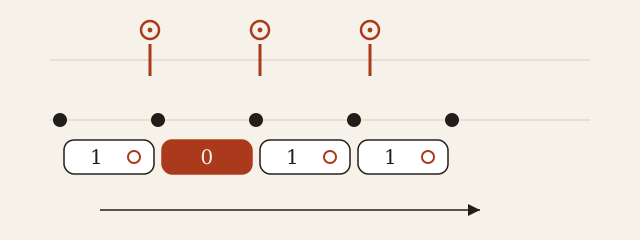
Which month becomes the extra one is not chosen by anyone. The rule is a counting test, and both our technical sources state it identically. A sankranti is the instant the Sun crosses from one zodiac sign into the next, the sidereal or nirayana signs the festival calendar uses. Ordinarily exactly one sankranti falls inside each lunar month, keeping the Moon's month and the Sun's month in step. But the Sun's month, the time it takes to cross one sign, is a little longer than the Moon's, and occasionally a lunar month begins and ends without the Sun changing sign at all. That month contains no sankranti, and it is the adhik maas. Panchangtime describes its engine doing exactly this for every day: find the new moons before and after, read the Sun's sidereal sign at each, and if the sign is the same at both ends, the month is adhika.
Why does the Sun occasionally fall behind like this? The astronomers' club gives the orbital reason: Earth's orbit is elliptical, so by Kepler's second law the Sun's apparent motion is faster near perigee and slower near apogee, and the time between consecutive sankrantis stretches and shrinks through the year. Where the solar month runs longest, the lunar month can slip entirely inside it, and an adhik month results. The insertion is, in the end, geometry.
The month that sometimes vanishes
Every correction gear can overshoot, and this one has a mirror. If a lunar month happens to contain two sankrantis, the calendar has the reverse problem, and a month is dropped: the kshaya masa, the omitted month. The astronomers' club explains it as compensation for the over-correction that inserting months accumulates over long spans, and notes it can happen when the Sun is near perigee, where its apparent motion is fastest. Both sources agree it is very rare: panchangtime reports the published almanac tables listing the last kshaya masa in 1983 and the next in 2124, bracketed by adhik months so the books balance. A reader alive today has likely never seen one, and that rarity itself is worth printing: the calendar drops months about as often as a century turns.
A borrowed name, and a true one
The adhik month has no name of its own. It borrows the name of the ordinary month that follows it, and that ordinary month then carries the prefix nija, the true one. So 2026 had Adhik Jyeshtha followed by Nija Jyeshtha. Panchangtime's table, computed for New Delhi in the amanta scheme, gives Adhik Jyeshtha from 17 May to 15 June 2026, and lists the next two: Adhik Chaitra, 16 March to 13 April 2029, and Adhik Bhadrapada, 19 August to 16 September 2031. ABP Live's report from 16 May 2026 matches the 2026 span exactly, and adds the lived texture: Jyeshtha that year stretched to nearly sixty days instead of thirty.
The naming rule has one consequence worth pausing on, and panchangtime pauses on it: anything dated to Jyeshtha belongs to the nija month, because the adhik month is a separate stretch with its own small set of observances. The extra month is not a longer Jyeshtha; it is an inserted column in the ledger, wearing Jyeshtha's name with a prefix that says it is on loan.
Where the books disagree, and where they agree
Almanacs do not dispute whether 2026 had an extra month in the Jyeshtha season; they all say it did. The differences are bookkeeping, and panchangtime lists three. First, the month-counting convention: as our amanta-purnimanta piece lays out, north Indian purnimanta calendars count months full moon to full moon, and some purnimanta sources reckon the extra month from the full moon, shifting its span by about a fortnight; the amanta span is what panchangtime and most published tables print. We saw this live in our own sources: ABP Live's report lists the regular Jyeshtha as 22 May to 29 June 2026, overlapping the adhik span, while panchangtime's amanta table runs the nija month after the adhik one ends. We report both as printed and do not reconcile them beyond what the sources state. Second, the city: sunrise and the exact minute of the new moon are local, and a new moon late on a month's last evening can place the adhik month's first day a day apart between India and America. Third, the ayanamsa: the sankranti test runs on a sidereal zodiac, and while the standard Lahiri value puts the 2026, 2029 and 2031 months where the tables show them, a different value could in principle shift a borderline case. The engine is exact; the rulers it reads are chosen by convention.
What happens to the festivals
The general rule, as panchangtime states it: a festival that comes once a year in a lunar month is kept in the nija month, not the adhik one. The clean worked case is 2029, where the adhik month is Chaitra: Ugadi, Gudi Padwa and Chaitra Navratri do not begin on 16 March with Adhik Chaitra; they fall on 14 April, at the start of Nija Chaitra, and Jain observances like Mahavir Jayanti move the same way. Monthly observances do not stop, because they hang on the tithi and not the month's name: Ekadashi, Pradosh, Sankashti Chaturthi and both moons fall in the adhik month too, listed with an Adhika prefix. And the adhik month has two observances found nowhere else: Padmini Ekadashi in its bright fortnight and Parama Ekadashi in its dark one, 27 May and 11 June in 2026. Drikpanchang attributes Padmini Ekadashi to the Padma Purana and adds a third adhik-only observance, Vibhuvana Sankashti, the Sankashti of the adhik dark fortnight; both citations are indirect, reported as the site presents them.
Against that tidy rule, drikpanchang records an exception, and we leave it standing as an exception rather than smoothing it over: when the adhik month is Jyeshtha, Ganga Dussehra and Durva Ashtami are observed during the adhik month itself, not the nija one. How far the exception reaches beyond those two festivals the page does not say, and we do not extend it. Drikpanchang also notes that Yugadi, Manvadi and shraddha rites are repeated in both months, and that a vrat spanning the join, such as the Vaishakha bathing observances that begin on Chaitra Purnima, concludes on the Purnima of the regular month, running across both.
Mal maas, Purushottam maas
The month carries two names that pull in opposite directions, and between them they hold its whole character. Mal maas, the impure month, reflects the old reading that a month with no sankranti has no proper place in the year, so ceremonies undertaken for gain are set aside in it. Purushottam maas comes from a story in the Puranic tradition: the extra month, neglected and called impure, appealed to Vishnu, who took it under his own name, Purushottama, and made it the year's best month for worship and charity. Panchangtime tells the story in brief; drikpanchang goes further, quoting the Purushottam Maas Mahatmya described in the Brihannaradiya Purana, where Krishna promises that whoever worships through this month attains him and does not return to birth. We did not fetch the Purana; the quotation reaches us through drikpanchang and is flagged as indirect. Drikpanchang also lists the month's other names, Malimmacha and Londa Maas, evidence of how widely the month traveled through the languages.
What is set aside, and what carries on
The traditional line is not "everything stops." It is a line between rites that must be done and rites done to gain something, as panchangtime frames it: daily duties and rites triggered by an event, a death anniversary, an eclipse, carry on; optional ceremonies, those performed for a wish or a new beginning, wait for the next ordinary month. Panchangtime's own muhurat tools mark the whole adhik month unavailable for ceremony purposes, while exempting medical care, travel and spiritual practice, the last actively prescribed rather than merely allowed. Drikpanchang, citing the Dharma Sindhu, gives the classical detail: upakarma and utsarga, ashtaka shraddha, mundana, upanayana, pilgrimage and vastu works are prohibited, along with a longer list from first deity-darshan to coronation; yet naimittika rites, those compelled by an arising cause, performed immediately, carry no restriction, and new vrats should neither begin nor conclude in the month. Both sources close with the same advice in different words: practice varies by region and family, and your own priest's ruling comes first. What is encouraged, both agree, is japa, Vishnu worship, charity, fasting and pilgrimage; ABP Live's report adds the year's lived customs, holy baths, Braj visits, daily ghee lamps, donations of food and cloth.
Reading your panchang in an adhik year
A short checklist closes the piece. If your calendar shows Adhika before a month name, you are reading the inserted month, and festivals you expect from that month name will arrive in the nija month after it. If two calendars give you different spans for the same adhik month, check whether one is purnimanta before suspecting an error; a fortnight's shift is the known bookkeeping difference, not a miscalculation. If you are planning a wedding, a griha pravesh or a mundan in an adhik year, expect your priest to move it to the nija month, and expect that to be normal, not an objection. If you keep Ekadashi, keep it straight through: the adhik month adds two that exist in no other month, and 2029 and 2031 are already on the table above. And if someone tells you a month once vanished from the calendar, they are not exaggerating; it is merely a story for the long-lived, last true in 1983, next true in 2124.
Questions on this article
When is the next adhik maas?
Adhik Jyeshtha ran 17 May to 15 June 2026. The next is Adhik Chaitra, 16 March to 13 April 2029, then Adhik Bhadrapada, 19 August to 16 September 2031. These dates are for New Delhi in the amanta scheme; purnimanta sources can shift the span by about a fortnight, and city and ayanamsa choices can move an edge day by one.
Why does adhik maas come roughly every three years?
Twelve lunar months run about 354 days, roughly 11 short of the solar year. When the shortfall accumulates to about a month, after 32 to 33 months, a thirteenth month is inserted. It happens seven times in nineteen years because nineteen solar years are very nearly 235 lunar months; that is arithmetic, not a laid-down rule, and we rechecked the multiplication ourselves.
Can I marry or move into a new house during adhik maas?
Traditionally no. Optional ceremonies for gain, weddings, upanayana, griha pravesh, wait for the next ordinary month, while daily worship, shraddha and event-bound rites carry on; the Dharma Sindhu’s list is on drikpanchang (indirect citation). Practice varies by region and family, so your own priest’s ruling comes first. Worship, japa, charity and pilgrimage are especially encouraged in this month.
What are Padmini and Parama Ekadashi?
The two Ekadashis that exist only in an adhik month: Padmini in its bright fortnight and Parama in its dark one. In 2026 they fell on 27 May and 11 June. Drikpanchang links Padmini Ekadashi to the Padma Purana and adds Vibhuvana Sankashti of the adhik dark fortnight (both indirect citations). In ordinary years these tithis carry their regular month names; the special names belong only to the thirteenth month.


